
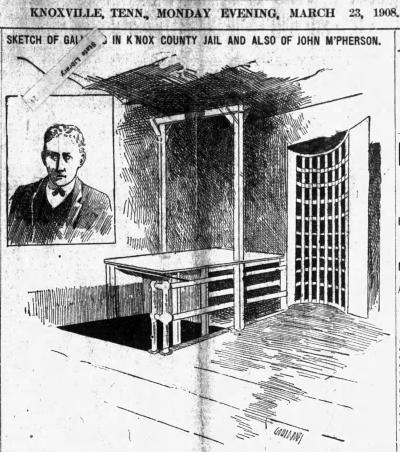
After John McPherson’s death in 1908, his family took great care to seal the young man’s grave. The black casket that held him was lowered into a vault of “burglar-proof steel” that locked itself once the lid was lowered.[1] With the addition of ten locks, two steel reinforcers, and cement, it would be a formidable challenge to get inside. However, it is possible that one could get out. Some say the spirit of John McPherson managed just that, and it is now roaming the Old City, a section of downtown Knoxville especially poignant for John, as it is where the events leading to his death occurred.
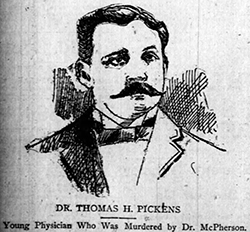
Long before John's death, the McPherson family was quite familiar with grief. Private John A. McPherson, John’s grandfather and namesake, was a Union soldier who fought with the 3rd Tennessee Calvary during the American Civil War. Pvt. McPherson survived being held as a prisoner of war only to die tragically amid the Sultana steamboat disaster, mere weeks after his release. Dr. Marion Alfred “Buck” McPherson, young John’s father, was a practicing physician in both Sevier and Knox counties until he was sentenced to serve seven years in the state penitentiary for murdering Dr. Thomas Pickens, a fellow physician.[2] With his grandfather deceased and his father incarcerated, teenaged John McPherson turned to gambling and other illicit affairs in “The Bowery” to support his mother and siblings.
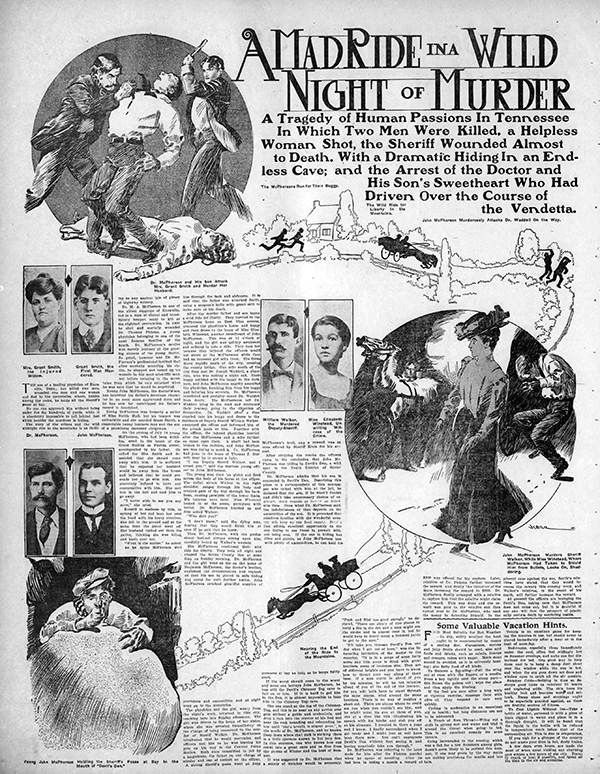
On July 14, 1906, Dr. McPherson (who, in 1904, was released early from prison on grounds of good behavior) and John spent the night in The Bowery, patronizing the saloons along Central Street. The father-son duo eventually wandered over to Florida Street, east of Central and south of the railroad tracks, to a section known as “Friendly Town,” Knoxville’s red-light district. The residence of Grant Smith and Nettie Hall was alleged to be one of Friendly Town’s “houses of ill-repute,” and it was there that the McPhersons demanded to be let inside. When Nettie refused entry, John reportedly pushed his way inside and struck her head with the handle of a gun. Grant rushed to his wife’s aid only to be shot fatally by John! The McPhersons fled.
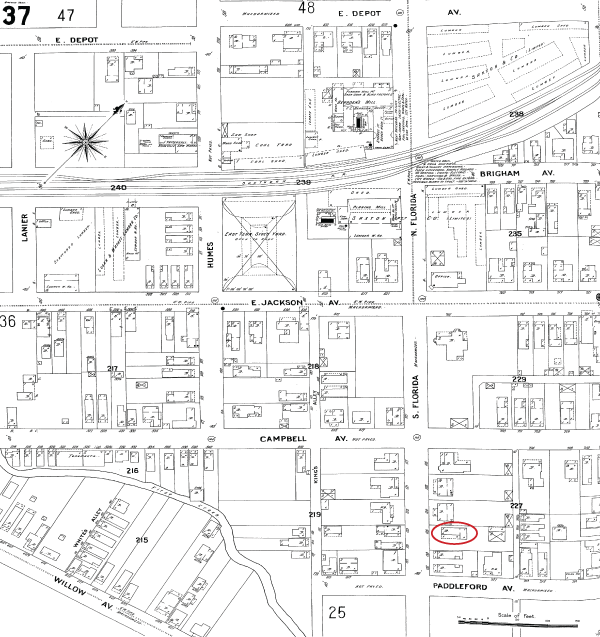
As the two men escaped toward South Knoxville, they were joined by Lizzie Winstead, a young woman with whom John was supposedly romantically involved. Lizzie lived with Emma Winstead, her sister and an iconic figure in The Bowery who also owned a house of ill-repute.[3] To expedite their getaway with Lizzi in tow, the McPhersons assaulted Dr. Joseph Wardell and stole his horse and buggy. Dr. Wardell was able to flag down a police officer, Deputy Sherriff William Walker, who began pursuit. Deputy Walker was shot by John and later succumbed to his injury.
John escaped to the hills of Sevier County, the same place where his father had fled after killing Dr. Pickens a decade earlier.
After nearly a year of evading arrest, John was captured in West Virginia in 1907 and was sentenced to the gallows for the murders of Grant Smith and Deputy Walker. Pleas to Tennessee’s governor requesting a pardon went unanswered. John McPherson was executed on March 23, 1908, and is believed to be the last legally hanged person in Knox County. Dr. McPherson was sentenced to 10 years in prison for acting as an accomplice to the murder of Deputy Walker; however, he was acquitted of the same charges in connection with Grant Smith. Lizzie Winstead was released from jail shortly after questioning.
The McPhersons are buried in Woodlawn Cemetery in South Knoxville, where John’s skeleton remains guarded by burglar-proof steel, locks, and layers of cement. Were the McPhersons afraid of grave robbers? Were they worried about retribution at the hands of the families of John’s victims? Or were they simply hopeful that the extra layers of protection would ensure that not only John, the young man who was forced to grow up in the rough-and-tumble Bowery, but also the legacy of his violent acts would remain buried forever?
Researched and written by Anna Flannery, Knox County Archives
[1] Knoxville Sentinel (1908, March 25). "Body is Placed in Steel Vault: Hermetically Sealed and Spring Locked Grave Receptacle." Newspapers.com. Retrieved from https://newscomwc.newspapers.com/article/knoxville-sentinel-john-mcpherson-burial/183878773/
[2]The Journal and Tribune. (1897, October 27). "Dr. Pickens shot by Dr. McPherson: A bloody murder at Shook‘s Gap Yesterday Afternoon." Newspapers.com. Retrieved from https://newscomwc.newspapers.com/article/the-journal-and-tribune-dr-marion-a-mc/183879032/
[3]The Journal and Tribune (1901, June 4). "Fun on the Bowery: Recorder Nelson Has a Large Batch of Callers From That Section." Newspapers.com. Retrieved from https://newscomwc.newspapers.com/article/the-journal-and-tribune-emma-winstead-pa/183878307/